Metal Hardness Testing Made Easy

Portable elemental analysis
Wherever a cable or wire rope holds a load, its tension is doing structural work — keeping a tower plumb against the wind, sharing weight evenly across an elevator’s hoist ropes, holding a stage rig or a zip line within its safety margin, or keeping an overhead line at its design sag. Get that tension right and the system behaves as engineered; get it wrong and you trade away service life, ride quality, or safety. This guide explains what cable and wire-rope tension is, why it matters across the systems that depend on it, how to measure it accurately on cables that are already installed, and which standards govern the task.

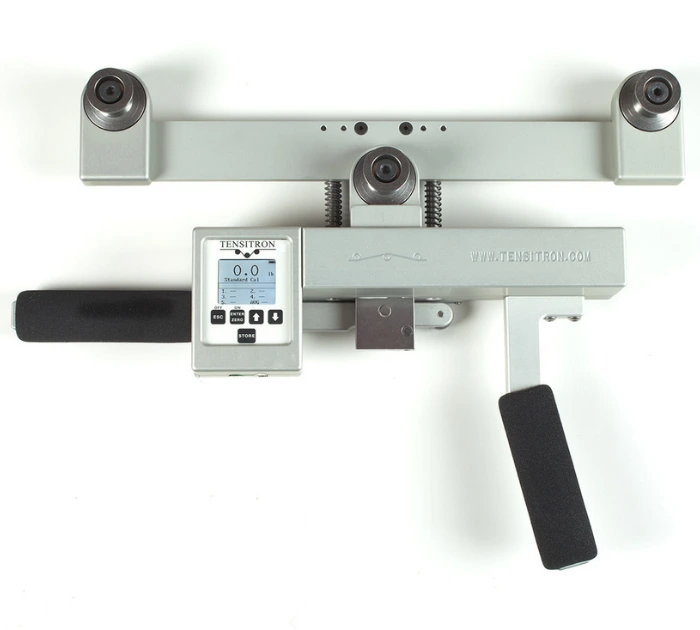
Tensitron CX digital cable tension meter used for measuring cable and wire rope tension

What cable and wire-rope tension is — and why you measure it in place

Tension is the steady axial load carried by a cable at rest. On a guyed tower it is the pretension that resists sway; on an elevator it is the share of car-and-counterweight weight each rope carries; on a rigging line it is the working load that must stay below a safe fraction of the cable’s breaking strength. In every case the number you care about is the tension in the cable as it sits in the system — not what a winch gauge read during installation, and not a value you can recover by cutting the line and pulling it on a test stand.
That is why these measurements are made with a clamp-on tensiometer. The instrument reads the tension in an installed, loaded cable without disconnecting it: the cable passes across two fixed anvils while a third point (the riser) deflects it a small, known amount, and the force needed to hold that deflection is proportional to the cable’s tension. Because the relationship between deflection and tension depends on the cable’s diameter, construction, and material, the meter is calibrated for the specific cable it will measure. Tensitron’s CX is built for exactly this work — flexible cable and wire rope from 1/16 in. up to 3/4 in. diameter, with custom calibrations for the materials you actually measure.

Why correct tension matters: the failure modes

The consequences of incorrect tension differ by system, but the pattern is consistent — too little and too much each cause real damage:

  • Guyed towers and antenna structures — under-tensioned guys let the mast sway and can allow buckling under wind or ice load and misalign antennas; over-tensioned guys overload the guys and anchors, add compression to the mast, and drive fatigue. Unequal tension across guys at the same level twists or bows the structure.
  • Elevator hoist ropes — when ropes in a set do not share load equally, the most heavily loaded ropes wear and fatigue faster, traction and ride quality suffer, and rope life drops. New ropes also stretch during break-in (constructional stretch), so tension must be re-checked and re-equalized after installation.
  • Rigging, zip lines, and stage systems — these are life-safety systems operating over people. Mis-tension risks dropped or uneven loads and overloaded support structure; correct, verified tension is part of keeping the system within its design envelope.
  • Telecom, catenary, and overhead lines — tension controls sag and the contact geometry the system depends on; too loose and the line sags out of spec, too tight and it fatigues its supports.

Related Topics

Why Tension Matters