Strap tension is the residual pull held in a strap or band after it has been applied and sealed around a load. It is the force responsible for compressing, stabilizing, and keeping a load unitized throughout handling and transport.
Every strapping process operates inside a working window.
Below the lower limit, the strap becomes too loose to keep the load secure and unitized.
Above the upper limit, the strap begins damaging the product or approaches its break point.
The objective is repeatable tension that lands inside the acceptable operating window every cycle, across operators, shifts, and production conditions.
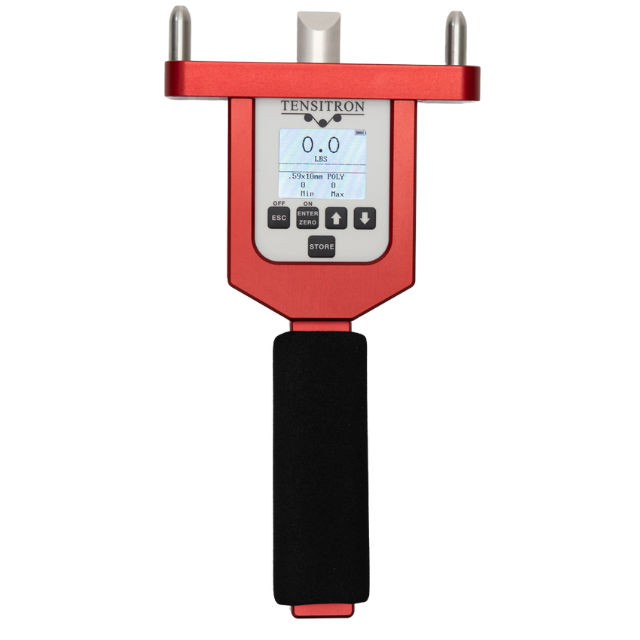
A strap tension meter exists to verify the tension the strap is actually holding — not the tension someone believes the tool applied.
Average results can look acceptable while individual loads remain outside specification.
Measurement turns “it felt right” into a verified setting and documented process.
Measure away from seals, corners, joints, and bends.
Select based on width, thickness, and material.
Read tension using engineering units.
Verify against approved limits.
Turn readings into process control and audit records.
Applied tension should be verified — not assumed.
Verify applied strap tension to prevent shipping damage while maintaining secure, repeatable load containment.
Verify tension in woven straps and freight tie-down systems used across truck and rail transport.
Maintain blade tracking, improve cut quality, and extend blade life through verified tension.
Confirm setup and operating tension for fence wire and other stiff stationary materials.
Bent geometry creates misleading readings.
Width, thickness, and material must match.
Variation appears across shifts and operators.
Verify actual tension, not dial position.
Drift quietly validates out-of-spec loads.
Land inside the operating tension window
Measure instead of relying on feel
Match the meter to the strap
Log readings for process control
Keep calibration current

Tension Measurement 101: Get the Basics Right!