Metal Hardness Testing Made Easy

Portable elemental analysis

CX
Cable & Wire Rope Digital Tension Meter

The cable looks fine.
That’s the problem.

Cable tension failures are invisible — right up until risk of damage on cables.

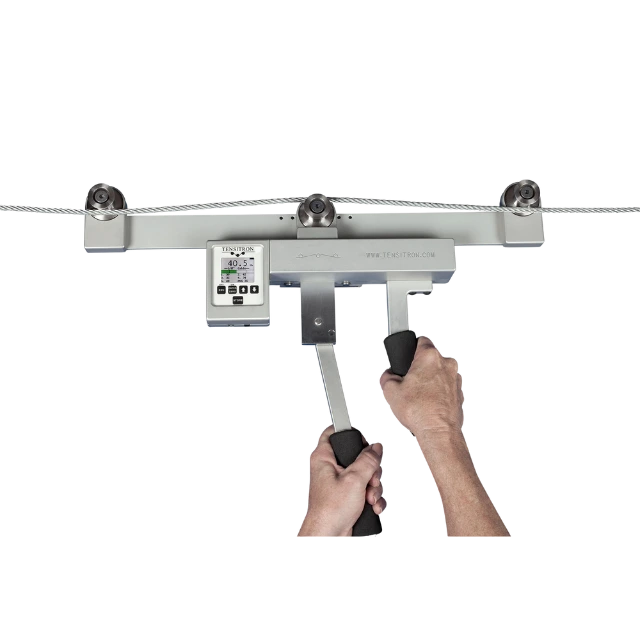
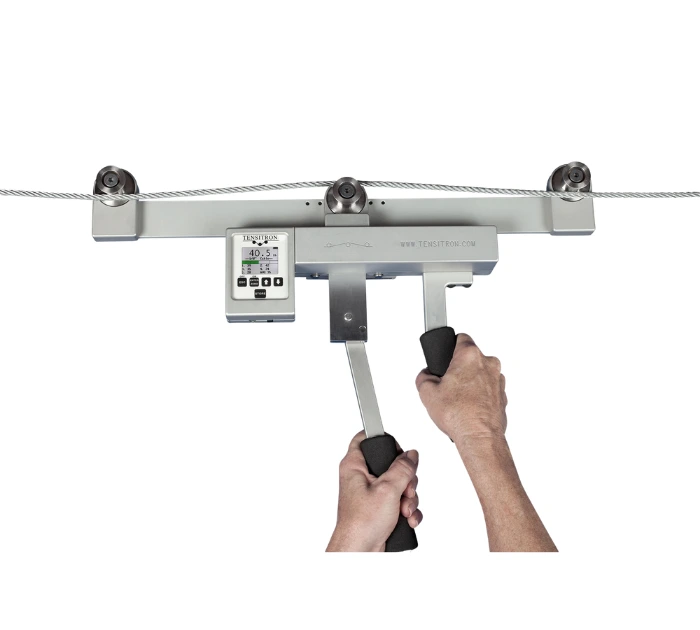
A guy wire under insufficient tension doesn’t sag visibly. An elevator hoist rope carrying more than its share looks like the others. The CX-1 clamps around the line without disturbing tension and gives you a direct, accurate reading — not a torque proxy, not a visual judgment call.

Tension Measurement Built for Accuracy and Performance

Application support • Proven instruments • Reliable data

American-Made Since 1935
±2% Full-Scale Accuracy
Factory-Calibrated To Your Cable
1-Year Warranty

What the CX-1 Does

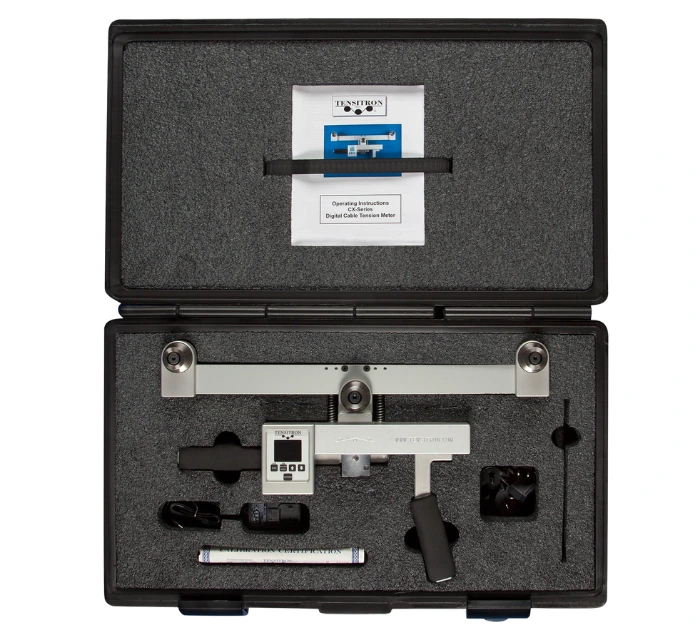
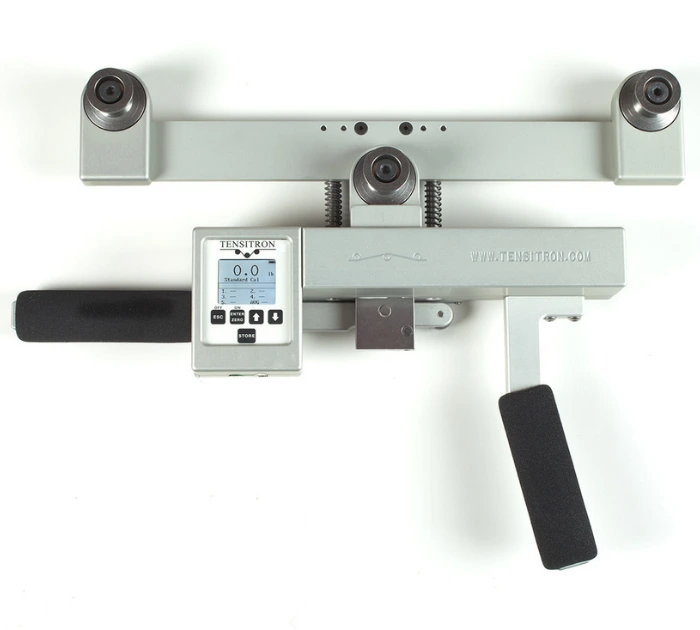
The CX-1 is a handheld digital tension meter for cables and wire rope from 1/16” to 3/4” in diameter. It’s custom-calibrated at the factory to your specific cable type before it ships — using an actual sample of the line you’ll be measuring. That step matters more than it sounds: a meter calibrated for your exact cable material and diameter gives you readings you can act on. A generic calibration gives you a number that may or may not correspond to real tension in that material.

You clamp around the line without disturbing tension, read the display, and know whether the cable is in specification or not. Up to 10 calibrations can be stored in a single unit — practical for inspection teams working across multiple cable specifications in one field session. Data output options (analog or RS-232 serial) support logging and integration where documented records are part of the job.

1/16–3/4”
Cable diameter range
20–2,000 lb
Tension range (model-dependent)
±2%
Full-scale accuracy
~60 sec
Clamp-on field reading

Accurate Cable Tension Measurement for Critical Infrastructure

Utility towers, communication structures, and other critical infrastructure rely on properly tensioned cables for safety and performance. Routine tension verification helps prevent premature wear, structural issues, and unexpected downtime.

Tensitron tension meters allow technicians to quickly measure cable tension in the field without disturbing the line. Factory calibration to the actual cable ensures accurate, repeatable readings for inspection, maintenance, and compliance programs.

Tower and Infrastructure Cable Tension Measurement

Reliable Cable Tension Measurement for Elevator Systems

Elevator performance and passenger safety depend on properly tensioned hoist ropes and compensation cables. Regular tension verification helps maintain smooth operation, reduce uneven wear, and extend component life.

Tensitron tension meters provide fast, accurate measurements without disconnecting the cable. Factory calibration to your specific cable type delivers reliable readings for installation, maintenance, and inspection programs.

Elevator Cable Tension Measurement

Precision Tension Measurement for Entertainment Rigging

Entertainment venues depend on properly tensioned cables to safely support lighting systems, video walls, speaker arrays, stage equipment, and overhead rigging structures. Verifying cable tension helps maintain safe operating conditions and consistent system performance.

Tensitron tension meters provide fast, accurate measurements without disconnecting the cable, making them ideal for setup, inspection, and maintenance activities. Factory calibration to the specific cable type ensures reliable, repeatable readings for demanding live-event environments.

Entertainment Rigging Cable Tension Measurement

Applications

Wherever cable tension is a safety, structural, or operational variable — and the only check is a visual one
— the CX-1 turns a judgment call into a documented number.

TOWER GUY WIRE & INFRASTRUCTURE

A guyed structure is only as stable as the tension holding it

Guyed towers support a significant share of the communications, utility, and monitoring infrastructure that modern operations depend on — across a wide range of industries:

COMMUNICATIONS

  • Cellular backhaul & microwave relay
  • Public-safety two-way radio
  • AM/FM/TV broadcast towers
  • Military HF/VHF/UHF towers

UTILITIES & ENERGY

  • Substation & grid-monitoring towers
  • Water/wastewater SCADA networks
  • Pipeline & wellhead telemetry
  • Remote mining communications

TRANSPORT & GOVERNMENT

  • Positive Train Control along rail lines
  • FAA ILS masts & nav antennas
  • NOAA / NWS meteorological towers
Every one of these operators faces the same problem: tension in guy wires doesn’t stay constant. Cables stretch and settle for weeks after installation. Thermal cycling drives tension up in cold and down in heat — a cable correctly tensioned in January can be measurably slack by midsummer. Wind fatigue loosens anchor hardware over years; frost heave shifts the geometry of the whole guy system. A tower correctly tensioned at installation may be well out of specification two years later, and nothing about its appearance will tell you that. When one cable loses tension, the others compensate unevenly — and a tower that enters a major weather event with under-tensioned guys faces wind loading it wasn’t prepared to handle.
500+
remote SCADA stations
13 + 8
water & wastewater plants
CX-2000-1
calibrated to 7/10 Alumoweld

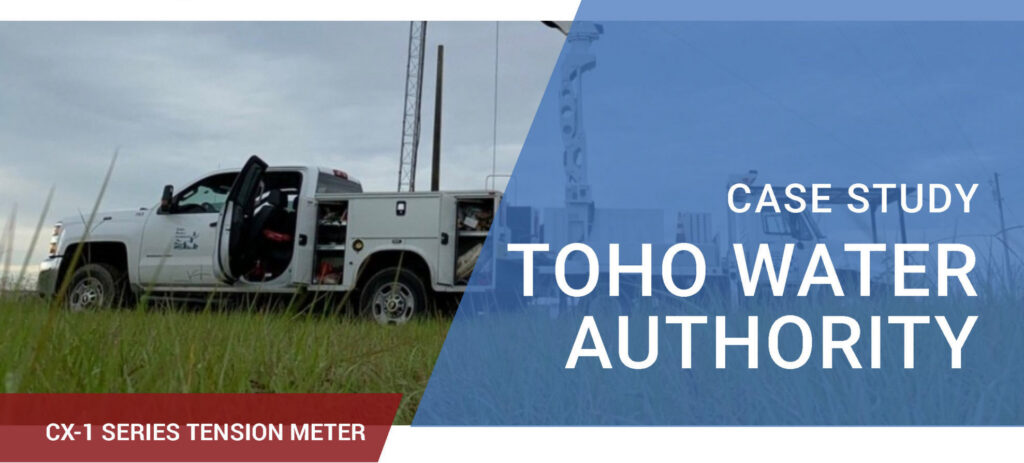
Toho Water Authority, one of Florida’s largest water and wastewater providers, anchors its communications backbone on guy-wire-supported Rohn towers across Osceola County. TWA’s SCADA division uses the CX-2000-1 — custom-calibrated to their cables — for annual tension inspection and pre-hurricane verification of every tower, replacing a manual process that produced inconsistent results and no reliable baseline.
Maintaining guyed towers?

ELEVATOR CABLE INSPECTION

An unbalanced rope set doesn’t cost you a rope — it costs you a full changeout

Modern traction elevators use multiple hoist ropes in parallel — typically four to eight — designed to share the load equally so the set lasts to its service interval. But ropes of the same nominal spec stretch at slightly different rates, especially when new. If tension isn’t equalized after installation or a single rope replacement, the highest-tensioned rope carries a disproportionate share, fatigues faster, and reaches end- of-life early. When it fails, it typically forces a full rope replacement — including ropes with years of service life remaining — plus emergency service calls, inspection requirements, and downtime tenants remember.
The CX-1 lets elevator contractors and building maintenance teams verify tension balance at installation, after any rope replacement, and at scheduled intervals. Consistent readings across the rope set confirm the system is working as designed. Documented readings prove the inspection actually happened.

Running a rigging or ride inspection program?

THEATER, ENTERTAINMENT & AMUSEMENT RIGGING

A visual check tells you the cable is taut. It doesn’t tell you whether the load is distributed correctly.

In a stage fly system, a counterweight rig is balanced when the arbor weight equals the load on the batten. Change a load, pull a sandbag, or adjust a trim without a matching counterweight change, and a significantly out-of-balance set will move on its own if a brake is released — fast, uncontrolled, and overhead. In arena and event rigging, multi-point bridles distribute a speaker cluster or lighting truss across several cables; if the legs aren’t carrying equal tension, the load isn’t distributed as the rigging calculations assumed.
For zip lines and cable-based attractions, the variable is temperature. A steel cable on a hot afternoon is physically longer than the same cable on a cool morning — and that length change is a direct change in tension. A line tensioned to spec at the start of the season can be measurably out of spec by midday: too low means more sag and riders stopping short; too high means faster travel and higher loads on braking hardware. Daily temperature swing alone can cycle a cable in and out of specification without anyone touching it.
The CX-1 suits regular cable inspection on fly systems, multi-point hangs, zip lines, and ride cables — where the alternative is adjusting tension from rider feedback or a visual look, which isn’t a measurement program. It’s a reactive one

Running a rigging or ride inspection program?

Specifications

Custom calibration requires a 10-foot sample of each cable material. Tensitron performs all calibration at the factory, allowing the CX-1 to arrive ready for immediate field use.

Cable Diameter Range 1/16” to 3/4”
Tension Range 20 to 2,000 lb (model-dependent)
Accuracy ±2% full-scale
Calibrations Stored Up to 10
Data Output Analog (Option A) or RS-232 Serial (Option E)
Rollers Flanged, 7/8” OD, 3/4” working length (standard); 2” or 3” cylindrical rollers for flat materials (Option R)
Calibration Custom-calibrated to your cable. 10-foot sample required.
Warranty One year against factory defects

Choose by Tension Range

Tension range is model-dependent. Buyers typically select by the maximum load they need to measure; the exact model is confirmed during the calibration process.

Model Max Tension Typical Use
CX-2000-1 2,000 lb Guy wire / SCADA tower inspection
Confirmation Designation Elevator hoist-rope balancing
Confirmation Designation Stage & event rigging, zip lines
Confirmation Designation 20 lb (low end) Light rigging & fine cable applications

Speak to a specialist 

This field is for validation purposes and should be left unchanged.
How Can We Assist?(Required)

Need more help?

Have questions? Speak to a specialist and get the answers and support you need.
Customer Services

(303) 702-1980

Email Us

sales@tensitron.com

Case Studies

Real life application of our tension meters